Monday, April 25, 2011

B's Garden Buzz-'Let's Get Started in the Garden'


     Even though the calendar says it’s the end of April, the weather has been more like the end of March.   Once the temperatures warm up and are less erratic the plants will grow like crazy.
     Like prepping a surface before you paint, prep work in the garden isn’t fun but will produce a better outcome.
     If you have never tested your soil, or it has been three or more years since your last test, do that first.  It is important to gather your samples before any fertilizers or amendments are added.  For information how to test your soil go to http://www.ct.gov/caes/cwp/view.asp?a=2836&q=378202.
     In organic landcare a couple of often used mantras are ‘feed the soil, feed the plant’ and ’right plant, right place’.  Soil is teeming with living organisms that interact together in what is termed the soil food web. Their action releases nutrients in the soil to be taken in through plant roots.  Adding organic matter, like compost, feeds these organisms, which in turn feeds the plant.  Synthetic fertilizers, used overtime, disrupts the soil food web and creates an imbalance in the soil.
     ‘Right plant, right place’ is about choosing plants that will thrive in the conditions where they are planted.  Those conditions include, the information from your soil test, the amount of sun and when, the space it needs to fit and your personal preferences. 
     Once you have cleaned out last years plant debris from your garden beds and pruned where needed, an application of slow release organic fertilizer and a 1-2 inch layer of compost is a great start to the growing season.

Saturday, April 16, 2011

B's Garden Buzz-'B's Bio'

B Wagner grew up in Woodmont and started working at Robert Treat Farm when she was 12 years old.  A graduate of UCONN’s Ratcliffe Hicks School of Agriculture, she is also a CNLA accredited nursery professional and a NOFA accredited Organic Land Care Professional.  For over 25 years, B has tended the grounds of a local private country club.  There she has designed, installed and maintained the gardens, as well as, all aspects of golf course maintenance.  She is available to assist you most Saturdays from 11-2 with your garden questions and plant selections.  Call ahead to ensure she is available.

Thursday, April 14, 2011

B's Garden Buzz-'Corn Gluten'

     Corn gluten is the organic alternative to step one of a four step synthetic lawn program.  Unlike the chemical option, it is safe for children and pets. Corn gluten doesn't harm soil organisms or the worms and insects that birds use to feed their young in the spring.
     Corn gluten acts as a preemergent herbicide by creating a barrier that will not allow germinating seeds to form roots.  It will only work on weeds that grow from seed like crabgrass.  There is no need to fertilize because corn gluten contains about 10% nitrogen.  For best results apply when forsythia comes into bloom at a rate of 20 lbs. per 1000 sq. ft.  If it doesn't rain within five days water in with approximately 1/4 inch of water.  This should be followed by a few dry days to be effective.  It should continue to work for about five to six weeks.  This timing is also the same for chemical  applications to be effective.
     If you use a lawn service to mow your lawn, keep in mind they usually don't clean their machines between jobs.  They may bring to your lawn weeds, insects and diseases from other sites.

Tips for a healthy lawn:    
      Mow at 3 inches or higher- more leaf area for deeper roots; shade out weeds.
      Leave clippings on the lawn-returns nitrogen to the soil; creates organic matter.
      Soil pH at 6 to 6.5- makes available most nutrients in the soil.
      If you water do it early in the morning to reduce disease.  Water longer but less often to encourage           deeper roots.


references:  The NOFA Organic Lawn and Turf Handbook
                    Nick Christians, Professor of Horticulture @ Iowa State University

Wednesday, April 13, 2011

Our Farm Share Program

We are now accepting applications for our 2011 Farm Share Program. A program that
allows families and individuals to prepurchase a share of our harvest as the crops come to ripen.
You pick up a weekly baskets stuffed full of what ever crops are ripe that week.


In 2010, we proudly introduced our Community Supported Agriculture (CSA) Program. With our Robert Treat Farm (RTF) Membership Basket Program, enjoy a weekly basket of produce hand-picked by Farmer Keith and meticulously prepared by Mary Treat and her devoted staff.
    Every Friday between June and October delight in the flavors our 20-week season has to offer. We offer three bountiful basket sizes to fit any budget. Payments are due before June 10, 2011. The reason for advanced payment is  because the money is used to help fund the farm upfront—for expenses like seed, mulch and fertilizer.

Three Basket Sizes

Full Share
Suitable for a family of four
$35 per week x 20 weeks
$700 season

HALF Share
Suitable for up to two adults
$20 per week x 20 weeks
$400 season

SINGLE Share
Suitable for one person
$12 per week x 20 weeks
$240 season

Add-a-Fruit
Seasonal native strawberries,
raspberries, blueberries, grapes,
plums, peaches, apples and pears.
$8 x 10 weeks = $80 season

Add Fresh-Cut-Flowers
Bi-weekly selection of flowers freshly-cut
from our fields, starting late summer.
$5 x 8 weeks = $40 season 

visit the site for more information.  http://www.roberttreatfarm.com/

We are now accepting applications for our 2011 Farm Share Program. A program that allows families and individuals to prepurchase a share of our harvest as the crops come to ripen. You pick up a weekly baskets stuffed full of what ever crops are ripe that week.

Download the Farm Share application here.
http://www.roberttreatfarm.com/Robert-Treat-Farm_Images/Robert-Treat-Farm-OurFarm/RTF%202011%20Membership.pdf


The Robert Treat Farm.
Authentic Family Farm and Garden Center.
Located at 1339 New Haven Ave. in Milford CT.
http://www.roberttreatfarm.com

Community Supported Agriculture Programs

Community supported agriculture (CSA) programs

This is a shot taken when our fields were in bloom just 2 years ago, mid summer. Our Farm Share program allows people to preorder a piece of our harvest. We prepare the best of the best picks in a neatly organized farm basket, which you can pick up every Friday as soon as the first yields come though. Why spend double to buy food that was grown in Mexico or South America, when you can pay half and get the food freshly picked from our land here in Milford Connecticut.!!!!

Read more and sign up now. Space is limited so preregister asap.
Call us if you have questions. (203) 878-4270
http://www.roberttreatfarm.com/OurFarm.html


CSA provides a direct link between local farmers and consumers. Each season, members purchase a share of a farmer's crop before it's planted. This allows the farmer to pay for seed, water and equipment upfront, so s/he is less reliant on banks and loans. Each week during the harvest time, usually June through October, the farmer delivers great tasting, healthy food to the members at pre-determined locations. In some instances, members pick up their share directly from the farm.


We are now accepting applications for our 2011 Farm Share Program. A program that allows families and individuals to prepurchase a share of our harvest as the crops come to ripen. You pick up a weekly baskets stuffed full of what ever crops are ripe that week.

Download the Farm Share application here.
http://www.roberttreatfarm.com/Robert-Treat-Farm_Images/Robert-Treat-Farm-OurFarm/RTF%202011%20Membership.pdf


The Robert Treat Farm.
Authentic Family Farm and Garden Center.
Located at 1339 New Haven Ave. in Milford CT.
http://www.roberttreatfarm.com


http://www.sustainabletable.org/issues/whybuylocal/

Tuesday, April 12, 2011

Buy Locally Grown. It's Thousands of Miles Fresher!

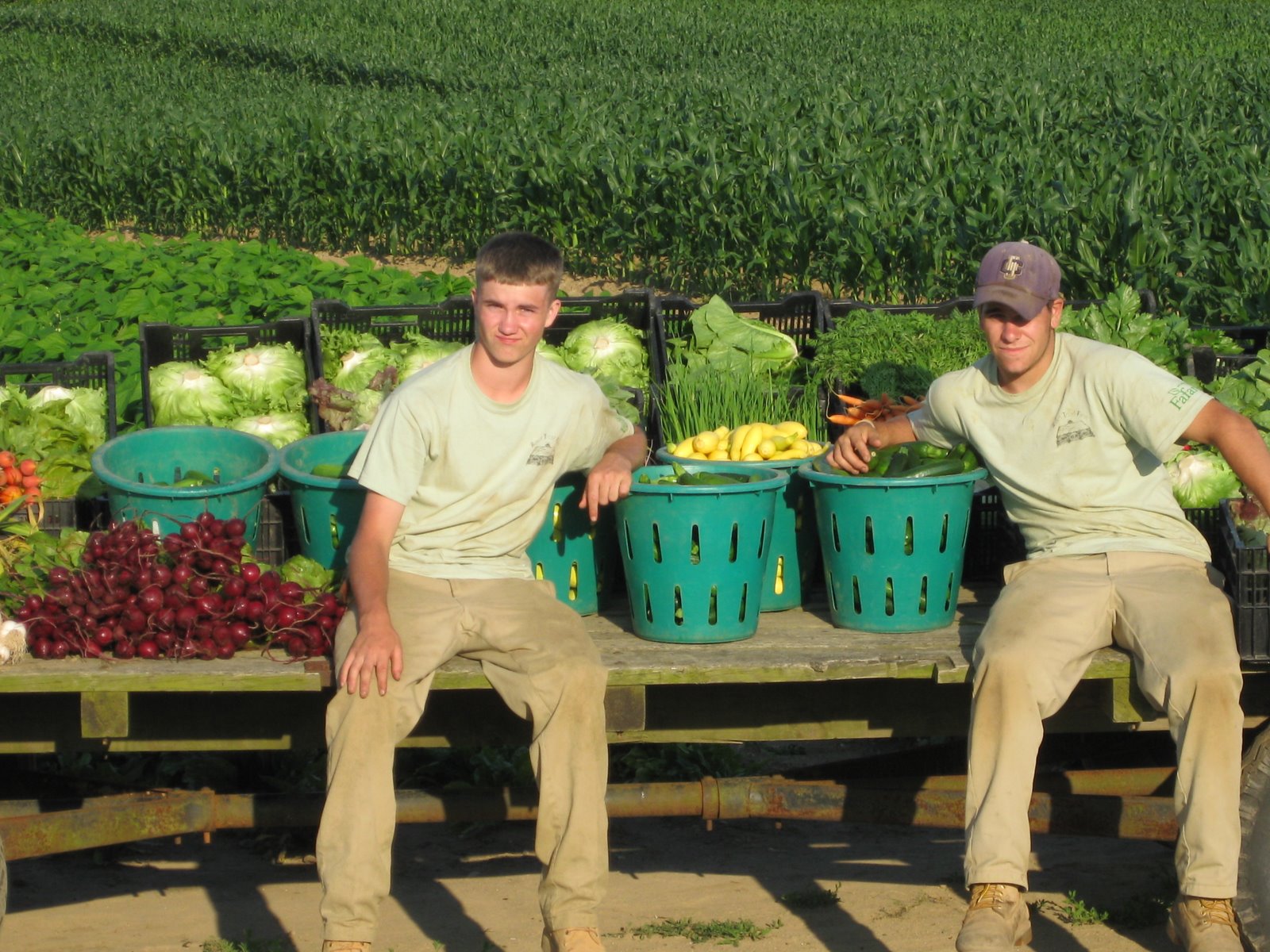
Two of our very best farm hands posing for a photo after harvesting food from our fields right here in Milford, CT at the Robert Treat Farm. Authentic Family Farm and Garden Center.
There Are Many Good Reasons To Buy Locally Grown Food


You'll get exceptional taste and freshness.

Local food is fresher and tastes better than food shipped long distances from other states or countries. Local farmers can offer produce varieties bred for taste and freshness rather than for shipping and long shelf life.

You'll strengthen your local economy.
Buying local food keeps your dollars circulating in your community. Getting to know the farmers who grow your food builds relationships based on understanding and trust, the foundation of strong communities.

You'll support endangered family farms.
There's never been a more critical time to support your farming neighbors. With each local food purchase, you ensure that more of your money spent on food goes to the farmer.

You'll safeguard your family's health.
Knowing where your food comes from and how it is grown or raised enables you to choose safe food from farmers who avoid or reduce their use of chemicals, pesticides, hormones, antibiotics, or genetically modified seed in their operations. Buy food from local farmers you trust.

You'll protect the environment.
Local food doesn't have to travel far. This reduces carbon dioxide emissions and packing materials. Buying local food also helps to make farming more profitable and selling farmland for development less attractive.

When you buy local food, you vote with your food dollar. This ensures that family farms in your community will continue to thrive and that healthy, flavorful, plentiful food will be available for future generations.

Article Source: http://www.foodroutes.org/whycare1.jsp


Buying local is this easy:If you live in the Milford, CT area the Robert Treat Farm is hands down, the best way to get locally grown produce. We sell what we grow at our farm store and at the Woodmont Farmer's Market, which is held weekly on our property through out the summer.

The very best way to buy local is:
To enroll in a Farm Share Program!

We are now accepting applications for our 2011 Farm Share Program. A program that allows families and individuals to prepurchase a share of our harvest as the crops come to ripen. You pick up a weekly baskets stuffed full of what ever crops are ripe that week.


Download the Farm Share application here.
http://www.roberttreatfarm.com/Robert-Treat-Farm_Images/Robert-Treat-Farm-OurFarm/RTF%202011%20Membership.pdf


The Robert Treat Farm.
Authentic Family Farm and Garden Center.
Located at 1339 New Haven Ave. in Milford CT.
http://www.roberttreatfarm.com

Why Buy Locally Grown?

Why Buy Locally Grown?


You’ve probably been told a million and one times that you should buy locally grown. And, you’ve also probably seen local farmers markets sprout up around your neighborhood. But why should you buy local? What’s the benefit to you, your community and the environment?

Local food tastes better. By buying local, you are receiving the freshest possible produce, picked just hours before delivery to your local store. Produce that travels long distances is days older. Sugars turn to starches, plant cells shrink, and produce loses its vitality and flavor.

Local food is more nutritious. Once harvested, produce quickly loses nutrients. Since local produce is sold right after it’s picked, it retains more nutrients.

Local food preserves genetic diversity.
Large commercial farms grow a relatively small number of hybrid fruits and vegetables because they can tolerate the rigors of harvesting, packing, shipping and storage. This leaves little genetic diversity in the food supply. Family farms, on the other hand, grow a huge number of varieties to extend their growing season, provide eye-catching colors and great flavor. Many varieties are “heirlooms” passed down through the generations because of their excellent flavor. Older varieties contain the genetic structure of hundreds or thousands of years of human selection and may provide the diversity needed to thrive in a changing climate.


Local food promotes energy conservation.
The average distance our food travels is 1500 miles, mostly by air and truck, increasing our dependence on petroleum. By buying locally, you conserve the energy that’s used for transport.


Local food uses less packaging.
Buying produce from a farmers market or from a farm itself is a no-frills process that involves less packaging.


Local food supports local farmers.
The American family farmer is a vanishing breed - fewer than 1,000,000 people (less than 1%) of Americans claim farming as a primary occupation. It’s no wonder: it’s hard to make a living when you get less than 10 cents of every retail food dollar. By buying locally, the middleman disappears and the farmer gets full retail price, in turn helping farmers continue to farm.


Local food builds community.
By getting to know the farmers who grow your food, you build understanding, trust and a connection to your neighbors & your environment. The weather, the seasons and the science of growing food offer great lessons in nature and agriculture. Visiting local farms with your friends and your family brings that education and appreciation to the next generation.


Local food preserves open space.
Do you enjoy visiting the countryside where you see lush fields of crops, meadows of wildflowers, picturesque barns and rolling pastures? Well, this should also serve as a reminder that our treasured agricultural landscape survives only when farms are financially viable. By spending your money on locally grown food, you’re increasing the value of the land to the farmer and making development less likely.


Local food keeps taxes in check.
For every $1 in revenue raised by residential development, governments spend $1.17 on services, which increases taxes. For every $1 in revenue raised by a farm, a forest or open space, governments spend $0.34 cents on services. You do the math.


Local food supports the environment and benefits wildlife.
Family farmers tend to be good stewards of the land – they respect and value fertile soil and clean water. And their farms provide the fields, meadows, forests, ponds and buildings that are the habitat for many beloved and important species of wildlife. In addition, buying local also reduces the use of fossil fuels and helps to protect the environment from harmful exhaust fumes.


Local food is about the future.
Supporting local farms today helps keep those farms in your community, ensuring that your children and grandchildren have access to nourishing, flavorful and abundant food. When you choose to buy locally, and make your choices known, you raise the consciousness of your family, friends and neighbors.

Article Source: http://www.dosomething.org/tipsandtools/why-buy-locally-grown


We are now accepting applications for our 2011 Farm Share Program. A program that allows families and individuals to prepurchase a share of our harvest as the crops come to ripen. You pick up a weekly baskets stuffed full of what ever crops are ripe that week.

Download the Farm Share application here.
http://www.roberttreatfarm.com/Robert-Treat-Farm_Images/Robert-Treat-Farm-OurFarm/RTF%202011%20Membership.pdf

The Robert Treat Farm.
Authentic Family Farm and Garden Center.
Located at 1339 New Haven Ave. in Milford CT.
http://www.roberttreatfarm.com

Monday, April 11, 2011

Getting Your Garden's Soil Ready.


The soil your plants grow in is very important.
The Robert Treat Farm has a wonderful Garden Center
Filled with everything you'll need to get your garden
ready for the season.
http://www.roberttreatfarm.com/GardenCenter.html

Experts say getting your garden soil ready should come in advance, its always before you actually start planting your garden. They say that you should begin preparing the soil anywhere from 2-4 months before planting. So you might end up preparing the soil before you even decide what type of garden you want to have!
Gardeners are frequently disappointed to discover that the soil is causing landscape plants to struggle for survival. The soil maybe full of debris, clay or stones, compacted, too shallow, or lacking in organic matter.
But, why is it so important having your garden soil ready? After all, plants have been growing for millions of years, right? Shouldn’t you be able to just stick a plant in the ground and watch it grow?
Different plants require different types of soil, and soil needs to have a lot of nutrients in it as well as a balanced PH level in order for plants to take root and thrive. Getting your garden soil ready for planting a flower garden can be a very serious business. Many astute gardeners attribute their green thumb to good soil. They know that garden success starts in the ground.

The Three Components in Getting You Garden Soil Ready

  1. Area Clearing
  2. Soil Aerating
  3. Adding Soil Amendments or Plant Food

Clear the Area

Pick up any brush, twigs, branches, rocks, or other debris and get them all out of the way. You should be starting with a nice, level, flat, clean area that you want to have your garden in. If you have to mark off a garden space, use rocks, spacers, or other identifiable items to mark out the area that you are claiming as a garden.

Aerate the Soil

On getting your garden soil ready, it’s important to break up and aerate the soil that you will be planting in. Use a rototiller or a hand tiller or even a spade to break up the ground and turn over the soil. While you are breaking up the soil, be on the lookout for any rocks or branches that may be buried under the soil and clear those out too.

Add Soil Amendments or Plant Foods

With a little knowledge and determination, you can use soil amendments to improve poor soil and make your landscape flourish. Soil amendments are materials that are mixed into the topsoil to promote healthy plant growth. Most garden and landscape plants perform best in soils high in organic matter. Because organic matter is used up in oxidation, especially in warm climates, or where soils are frequently tilled, it should be added to the soil every year.
Plant Food’s primary function is to supply nutrients. You will need to add a few bags of potting soil that has been enriched with plant vitamins and nutrients or mulch or both to the existing soil. Mix the new into the old so that the nutrients in the mulch and vitamin enriched soil blend into the original soil, this is why getting your garden soil ready is always advisable.

Article Source: http://www.basicsofgardening.com/getting-your-garden-soil-ready.html


Here at the Robert Treat Farm Garden Center we offer topsoil, mulch and fertilizer that are perfect for getting your garden ready this year.  Ask one of our staff members for the best selections and advice.

To learn more about our garden center, visit http://www.roberttreatfarm.com/GardenCenter.html


The Robert Treat Farm.
Authentic Family Farm and Garden Center.
Located at 1339 New Haven Ave. in Milford CT.
http://www.roberttreatfarm.com

Friday, April 8, 2011

Getting your garden ready for Spring


April is the perfect time to give your garden the attention it needs to bring you months of enjoyment in the long lazy days that await us. A little bit of garden CPR now, will bring you months of color to brighten the view from your kitchen window, and might even inspire you to spend more time outdoors enjoying the delights that can be found in entertaining outdoors.

Plant your bulbs now, if you have not already. My favourite bulbs to plant in early Spring are Tulips, Gladiolus, Calla Lily, Caladium, Amaryllis, and Delphiniums.

Plant bulbs in clumps to give them a natural effect, and to hide the bulbs that fail to blossom. Survey the area you want to plant the bulbs in, decide where you want them, then dig a large area and simply toss your bulbs in the hole with the pointed side up (and if like me you generally ignore instruction packets, make a point to read them on this occasion to ensure you plant them deep enough). I generally give them a good drink before I cover them with soil and then again once the soil blankets them. Make sure you mark your bulb location so you can ensure the area stays moist and to avoid disturbing it.


Rejuvenate your Lawn. Your grass is at its most fragile right now and needs plenty of TLC to nurse it back to life after a long cold winter. Give your lawn a good feed and re-seed, then keep it moist to encourage germination. To ensure that all of your hard work pays off, work from a wooden plant or kneeling board to prevent damaging it further.

Tidy up your garden equipment

• Get your garden tools in shape for the busy season by sharpening your mower blades, replacing any damaged tools, ensuring you have gardening supplies stocked in your shed (plant food, bird netting, what ever you need to keep your garden growing).
• Look over your garden steps, decking, paths, fences to check for winter damage and repair replace as needed.
• Tidy up your garden furniture by giving everything a good wipe down and polish, then repair or replace any broken equipment.
• If you have children, now is a good time to review your garden toys and get rid of anything broken that cannot be fixed, they have outgrown or that you are just tired of looking at.


The Robert Treat Farm Garden Center. From our Green Houses to your Garden. Located in Milford CT.


Wander through our garden center
, and you will find a great collection of interesting and unusual annuals, sought-after perennials, shrubbery and trees.
You’ll notice all our pretty greenhouses filled with the things we grow for you to discover. Custom potting is a specialty of ours so you can get exactly what you
want. If you don’t know what that might be, it doesn’t matter – we can help
you choose something you'll love! Perhaps we can work to make something
special – in your favorite color, or for a shady area, or even to attract
beneficial insects and hummingbirds.

We take your garden success personally, because we are gardeners, too!
Your garden will be blooming with all kinds of natural wonders because we
have a wealth of knowledge – and the green thumbs to prove it! We will be
only too happy to help you choose just the right things for your project.
Whether it is a ceramic planter on a balcony or a whole landscape – every
project deserves a little planning for the best results and having the right
plant in the right place is a very good place to start. Maybe you’ll get
inspired to plant an herb or vegetable garden this year but don’t know
where to begin, or perhaps you would like to know how to prune the
roses you are about to plant or how to dead-head your flowering annuals.
Let us show you.

All of our gardening supplies are carefully selected for this area.
You’ll find everything you will need – mulch, the proper fertilizer, grass seed,
as well as whimsical statuary and ornaments, or an interesting birdbath for
your feathered friends. If you are looking for the perfect gift, you might
decide on a Robert Treat Farm Gift Certificate – they never expire and
may be used to purchase anything we have for sale.


http://www.roberttreatfarm.com/GardenCenter.html

Don't forget about our Farm Share Program.
Where you can prepurchase a share of our harvest as it comes to ripen.
Every Friday through out the whole summer.
To learn more.

To download the registration form, click here.

Call us if you have questions about any gardening product or service offer.

(203) 878-4270


Source: http://www.housewifebliss.com/2011/03/07/getting-your-garden-reading-for-spring/

Great Early Spring Vegetables to Grow


As winter slowly transforms into early spring, there are many fantastic vegetables that can be planted.
Some vegetables prefer warm or hot weather, but there are many that perform best in cool temperatures. To get a jump on your vegetable garden, try growing a few cooler season vegetables in early spring. Here are just a few vegetables that grow best in cooler seasons.

Lettuce.

Lettuce is a cool weather crop that performs best when grown before the heat of summer starts coming in.

Head lettuce can be started indoors six weeks before the last frost date and transplanted outdoors three weeks before the last frost date.

Leaf lettuces can be direct-sowed in the garden in early spring or fall.

Thin seedlings to about 8 inches apart or 12 inches apart for head lettuces in rows at least 18 inches apart. Be sure to pull any weeds by hand to avoid disturbing the delicate, shallow roots of nearby plants.

Try to keep the soil moist but not waterlogged. Use mulch around plants to help keep soil cool and moist.

You can make successive plantings for a prolonged harvest. Most lettuce seedlings can tolerate a light frost.

Head lettuces need a long, cool growing time compared to leaf lettuces. Leaf lettuces can be harvested when the leaves reach about 2 inches.

When leaves are 4 to 6 inches, the entire plant can be pulled and used in salads before they become bitter and tough.

Some excellent lettuce varieties to grow are:

• Buttercrunch
• Red Salad Bowl
• Burpee Bibb
• Braveheart
• Black-Seeded Simpson
• Vivian
• Iceberg

Peas.

Peas, also called English Peas or garden peas, are a great crop to start in early spring.

Peas perform best when temperatures remain below 80°F, but above 25°F. They can tolerate temperatures below 25°F for brief periods, but prolonged exposure can have detrimental effects in later development. Flowers can drop off and vines can wither if temperatures rise above 80°F. Direct-sow peas in the garden as they do not perform well when transplanted. Most pea plants need a trellis or stakes for support. Plant the seeds at a depth of 1 inch and about 6 to 8 inches apart.

Some recommended pea varieties are:

• Wando
• Super Sugar Snap
• Burpeena Early
• Oregon Sugar Pod
• RSVPea

Broccoli.

Broccoli grows more vigorously in cooler weather and can be planted in spring or fall. It grows best in rich soil with plenty of nitrogen and calcium. Broccoli can be started indoors and transplanted in the vegetable garden, or direct-sowed about 18 inches apart in the garden.
Grow from seed when the soil is about 40°F or above, or from transplants when the soil reaches 60°F.


You might want to try these broccoli varieties:

• Flash
• Raab Rapini
• Green Goliath
• Bonanza
• Green Spring Calabrese


Cauliflower.

Cauliflower can be grown in much the same way as broccoli. Seeds can be sown directly in the garden when soil temperatures reach about 40°F. Seedlings can be transplanted in well-drained, rich soil that receives full sun to slight shade. Weed very carefully around cauliflower to avoid damaging leaves which can cause under-developing heads (or buttoning).
To protect white cauliflower varieties from sunscald, blanching may be necessary. Blanch by pulling the longest leaves over the head and hold them in place with twine or soft strips of cloth. Begin blanching as soon as you see a head and make sure the leaves are dry. Purple and green varieties do not need blanching.

A couple awesome cauliflower varieties for your vegetable garden are:

• Early White
• First White

Brussels Sprouts.

Brussels Sprouts can be planted by seed 1/2-inch deep and 2 inches apart in an outdoor seed bed about 90 days before the first frost date. They require rich soil with good compost or well-aged composted manure. Stalks can produce 50 to 100 sprouts at the points where the leaves join the stalk. They can be interplanted with lettuces and spinach. Use a good organic fertilizer for feeding seedlings and protect them from direct sun until they are well established.

Some Brussels Sprouts for your vegetable garden are:

• Long Island
• Dimitri
• Catskill


Source: http://www.veggiegardener.com/great-early-spring-vegetables/


The Robert Treat Farm
Community Supported Agriculture Program. (CSA)
The Robert Treat Farm Share Basket.

Learn More. Visit our website. http://www.roberttreatfarm.com/OurFarm.html

To Download the registration form and be enrolled in our 2011 Farm Share Program.
Click here.

Why Purchase the RTF Membership Basket?

• Enjoy eating freshly-picked, delicious, veggies
• Make a healthy choice by eating what grows each season
• “Homegrown” means grown here inMilford on our 30 acres
• Try new varieties and recipes (we’ll even give you a few recipe ideas)
• Teach your family where your food really comes from
• Help support local business and preserve farmland
• Save money vs. supermarket or bulk food stores
• Member discounts on select market items*
*For a reduced price, add select items to your basket on pickup day.


Did You Know...

• Supermarket produce travels thousands of miles and can sit in a warehouse for several days before it sits again on the supermarket shelves waiting for you to buy it? These varieties may survive the travel, but they tend to loose nutritional value on the way, and don’t necessarily taste good.

• Supermarket produce is usually treated with chemicals so it can last long enough and look good enough for you to want to buy it?

• Many children don’t know where food comes from!


Tuesday, April 5, 2011

Why Buy Local? Robert Treat Farm is Local and Connecticut Grown!


Why buy local?


There are countless reasons why buying local food is both rewarding and delicious, including enjoying the taste of fresh food, improved health and nutrition, environmental stewardship, support for family farms and rural communities, and ensuring animal welfare.
There is also significant peace of mind in knowing where our food comes from. One of the biggest benefits to buying food locally is having someone to answer questions about how it was grown and raised. What goes into that loaf of bread? Can we be certain that the hog that is now bacon lived a life without suffering? How do we know those jalapeƱos are salmonella free?
Developing a relationship with local farmers gives us an "in" with our local food system. At farmers' markets we can get answers to questions like: When do tomatoes come into season? How might I use celeriac? Often, we can take a tour of the farm our food comes from. Some farmers are thrilled to share their knowledge and experience with their customers. Ask about the challenges your local farmers face and what they are doing to address them. It doesn't have to be complicated. Ask about the weather! Any farmer will be pleased to talk about how the growing season is going and how that affects the food they grow. Knowing local farmers can go a long way to simplifying buying local.
Another significant reason to buy local is to keep food miles to a minimum. "Food miles" refer to the distance a food item travels from the farm to your home. The food miles for items in the grocery store are, on average, 27 times higher than the food miles for goods bought from local sources.1
In the U.S., the average grocery store's produce travels nearly 1,500 miles between the farm where it was grown and your refrigerator.2 About 40% of our fruit is produced overseas and, even though broccoli is grown all over the country, the broccoli we buy at the supermarket travels an average of 1,800 miles to get there. Notably, nine percent of our red meat comes from foreign countries, some as far away as Australia and New Zealand.3
Our food is trucked across the country, hauled in freighter ships over oceans, and flown around the world. A tremendous amount of fossil fuel is burned to transport foods such long distances, releasing carbon dioxide, sulfur dioxide, particulate matter and other pollutants that contribute to global climate change, acid rain, smog and air and sea pollution. The refrigeration required to keep our fruits, vegetables, dairy products and meats from spoiling during their long journeys burn up even more fossil fuel. In contrast, local and regional food systems produce 17 times less CO2.4

We are now accepting enrollment applications for our 2011 Farm Share Program.
A freshly picked basket of locally grown produce direct from our fields here at the Robert Treat Farm in Milford Connecticut. For the application and details about the program, visit our website.
For The application, click here.


http://www.roberttreatfarm.com/OurFarm.html


Source: http://www.sustainabletable.org/issues/whybuylocal/